The Fine Line Between Psychosis and Spirituaity

As the metaphysical continues to gain popularity and more and more influencers openly discuss their spiritual practices and beliefs, there is a rise in videos made by skeptics suggesting that some of these content creators are experiencing “spiritual psychosis”. Psychosis is a psychological condition in which individuals experience delusions and hallucinations that are not based in reality that cause clinically significant distress. An individual is considered to be experiencing “clinically significant distress” when their emotional and psychological symptoms are severe enough to negatively impact their daily life and functioning.
Psychosis is often associated with psychotic disorders such as schizophrenia but individuals with other diagnoses may experience psychosis as well. Psychosis can also be triggered by substance use and lack of sleep. Spiritual psychosis, also known as religious psychosis, is when individuals experience psychosis but their delusions and hallucinations are centered around spiritual and religious content. This has become a controversial and sensitive topic for many people who actively maintain and are open about their spiritual practices, especially if they are diagnosed with mental illness(es) or if they incorporate hallucinogenic substances into it.
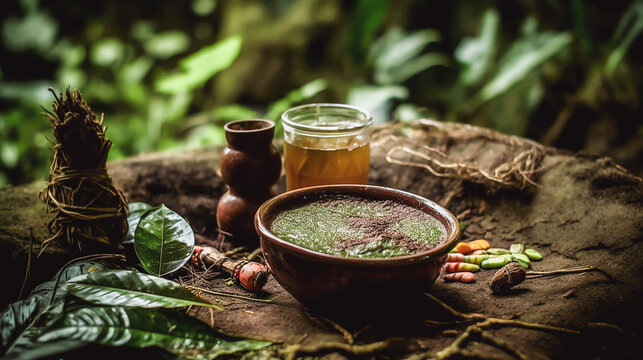
Influencer and singer Shanin Blake is a prime example of an individual with a pronounced social media presence who is frequently criticized and accused of experiencing spiritual psychosis. She is well-known for her music whose lyrics are centered around and inspired by new age beliefs and her spiritual experiences. I want to emphasize that I am not saying that she is or is not experiencing spiritual psychosis as I do not know her personally and can only speak to what is shared on social media. The most common example people cite to back their argument that she is experiencing spiritual psychosis is her claim that she healed her own kidney infection during an ayahuasca retreat she attended in San Pedro, Peru, which she references in her song, “Peru Song”. When asked about this, she states that she is not encouraging others to not seek medical treatment for their ailments. Ayahuasca is a psychedelic brew made from the stems of the Banisteriopsis caapi vine alongside other plants. It is commonly used in South America to elicit spiritual experiences during ceremonies due to its psychedelic effects. While there is limited research about this substance, many believe that it has healing properties.
However, hallucinogens can trigger the development of a psychotic disorder, especially with prolonged use. In this case, the individuals delusions and hallucinations persist even after the substance is no longer in the person’s system and they meet the diagnostic criteria for a psychotic disorder. Blake references using other hallucinogenic substances, such as acid and psilocybin (also known as magic mushrooms), in her song “Nature Song”. Due to this, critics speculate that her substance use may have resulted in her developing a psychotic disorder.
Another person, Amy Carlson, an American cult leader more commonly known as “Mother God”, whose story is shared in the HBO documentary “Love Has Won: The Cult of Mother God”, has been spotlighted over the years and is used as an example of someone who displayed symptoms of legitimate spiritual psychosis. Given her following, her symptoms were overlooked and perpetuated for years until her demise in 2020. Carlson had her first notable spiritual experience in the early 2000s after joining an online forum centered around new age beliefs. More specifically, she claimed that she heard a voice telling her she would one day become the president of the United States.
While she was never diagnosed with a psychotic disorder, she displayed characteristic symptoms of psychosis such as delusions that she was regularly communicating with and channeling her “etheric team” that consisted of deceased celebrities such as Robin Williams, Patrick Swayze, and, the living, Donald Trump-who she also believed was her dad. She claimed that she lived in Lemuria but was not able to fully ascend because humanity wasn’t ready yet. Many aspects of her beliefs aligned with “New Age” spirituality which is how she was able to garner a cult following and market herself. She would sell crystals and energy clearing kits on her website in addition to offering her spiritual surgeon healing services that worked “multidimensionally” to cure ailments such as cancer and lyme disease.

No one questioned her actions because for a long time they aligned with the culture she identified with. However, after her passing, some of her followers reported that there were occasions when Carlson would sob hysterically while she was intoxicated and admit that she was not sure if she actually was “Mother God” or if it was all in her head. Carlson died in September 2020 due to a combination of alcohol abuse, anorexia, and regularly ingesting colloidal silver because she believed it had healing properties (Olson, 2023). Perhaps if her symptoms were correctly identified early on, her mental decline and tragic death could have been prevented.
On the other hand, unfortunately, spiritual individuals are commonly misdiagnosed by mental health professionals when they share their experiences. As a therapist and someone who embraces the metaphysical, it is important that I am conscientious of not assuming whether or not my clients spiritual experiences are based in psychosis. That being said, I have taken the time to review existing research about this topic to shed light on whether or not the question as to whether someone’s spiritual experiences are possibly crossing the line into psychosis. Current research suggests that clinicians diagnose individuals with schizophrenia and/or schizoaffective disorder based on their race more often than other demographic variables such as age, gender, and economic status.
A case study conducted by Jegarl et al. (2023) followed a young black woman who moved to the U.S. from Africa who was diagnosed with schizophrenia despite denying experiencing many of the characteristic symptoms such as AVHDs. While she denied experiencing these symptoms, she did consistently endorse symptoms of post-traumatic stress disorder (PTSD) and major depressive disorder (MDD) throughout her treatment. During one of her stays at an inpatient hospital, she began praying to help her cope with her PTSD and MDD symptoms. In the shift note, the nurse recorded that the client expressed that she had “caught a demon” and her symptoms were the result of her “being punished by God”. This, in conjunction with her belief that she was seeing spirits, is consistent with the cultural norms of Africa.
However, in the eyes of the psychiatric unit, it was considered to be indicative of psychosis and was reinforced by the results of her mental status exam. Over the years, she was prescribed multiple medications to treat a psychotic disorder she did not have and received countless hours of costly and ineffective treatment. Thankfully, she was later provided the correct diagnosis of MDD and PTSD which allowed her to receive proper treatment for her mental health. However, due to systemic racism and mental health workers’ lack of cultural competence, she spent years of her life suffering, her symptoms gradually worsening as she was gaslit and mislabeled as experiencing psychosis (Jegarl et al., 2023).
Currently, there is no set criteria that can be used to differentiate whether an individual is experiencing psychosis or a spiritual experience. Eeles et al. (2003) set out to pave the foundation for this by interviewing 13 registered mental health nurses and one nurse in training in the UK about the criteria they use to distinguish the two. Consistent amongst the sample was the emphasis on the importance of taking cultural context into consideration, having holistic idea of the patients experience, and working as a team to minimize idiosyncratic decision making. The predominant view amongst participants was that any reported spiritual experience that aligns with the client’s cultural beliefs should not be considered pathological. However, while it is important to be mindful of cultural factors that may influence a client’s presentation, there is still a fine line between taking cultural factors into consideration and overlooking psychotic episodes-Amy Carlson is a prime example of how easily this line can be blurred.
However, spirituality can be a be incredibly supportive for individuals who are facing adversity and stress. For many, religion and spirituality can promote a positive sense of self, mitigate symptoms of mental illness, and encourage engagement with the community (Mohr et al., 2009). In fact, spirituality is believed to play a key role in the recovery of individuals with psychotic disorders. Mohr et al. (2009) identifies four key processes that spirituality elicits while in recovery from symptoms of psychosis: finding hope, reestablishing their identity, attributing meaning to their lives, and taking responsibility for their recovery. Additionally, Virdee et al. (2016) found that individuals living with psychotic disorders’ spiritual beliefs and practices gives them a sense of empowerment and helps foster a sense of community even when they have limited access to social and material capital.
References:
Eeles, J., Lowe, T., & Wellman, N. (2003). Spirituality or psychosis?-An exploration of the criteria that nurses use to evaluate spiritual type experiences reported by patients. International Journal of Nursing Studies, 40(2), 197-206. https://doi.org/10.1016/s0020-7489(02)00061-5
Jegarl, A. M., Jegede, O., Isom, J., Ciarleglio, N., & Black, C. (2023). Psychotic misdiagnosis of racially minoritized patients: A case based ethics, equity, and educational exploration. Harvard Review of Psychiatry, 31(1), 28-37. https://doi.org/10.1097/HRP.0000000000000353
Mohr, S., Borras, L., Rieben, I., Betrisey, C., Gillieron, C., Brandt, P., Perroud, N., Huguelet, P. (2009). Evolution of spirituality and religiousness in chronic schizophrenia or schizoaffective disorders: A three-years follow-up study. Social Psychiatry and Psychiatric Epidemiology, 45(11), 1095-1103. https://doi.org/10.1007/s00127-009-0151-0
Olson, H. (Director). (2023). Love has won: The cult of mother god [Film]. HBO Documentary Films, Elara Pictures, & Open Secret.
 Summerland Spirits